PECB ISO-IEC-42001-Lead-Auditor DUMPS WITH REAL EXAM QUESTIONS
198 Total Questions

$59 3 Months Free Updates
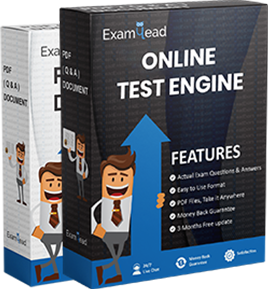
$79 3 Months Free Updates
198 Total Questions

$69 3 Months Free Updates

We are providing free PECB ISO-IEC-42001-Lead-Auditor practice questions answers that show the quality of our ISO-IEC-42001-Lead-Auditor exam dumps. We ensure you that Exam4Lead is one of the most reliable website for PECB ISO-IEC-42001-Lead-Auditor exam preparation. Feel free and download our ISO-IEC-42001-Lead-Auditor dumps and pass your exam with full confidence.

Very Effective & Helpful ISO-IEC-42001-Lead-Auditor Dumps PDF + Test Engine
If you are worried about your PECB ISO-IEC-42001-Lead-Auditor exam and you don't prepare it yet and you also still searching worthy study material for your ISO-IEC-42001-Lead-Auditor exam preparation. Then don't worry about it anymore we have one solution for your exam problems. Exam4Lead team is working for many years in this field and we have thousands of satisfied customers from entire world. We will provide you exactly same ISO-IEC-42001-Lead-Auditor real exam questions with valid answers in PDF file which helps you to prepare it easily and you will ready to do your exam and pass it in first attempt. If you want to check your exam preparation then we have ISO-IEC-42001-Lead-Auditor online practice software as well. You can check your ISO-IEC-42001-Lead-Auditor exam preparation online with our test engine.
Increase Your Confidence & Boost your ISO-IEC-42001-Lead-Auditor Exam Preparation
Increase your ISO-IEC-42001-Lead-Auditor exam preparation by using our test engine. It helps to check your exam preparation and it create real exam environment. We designed it like you are taking real exam, it has two phase first is practice mode and second is real exam mode. In practice mode you will practice all the ISO-IEC-42001-Lead-Auditor exam questions with answer and in exam mode you will check your exam preparation and you will sense that you are taking actual exam which boost your confidence for taking your exam.
Free ISO-IEC-42001-Lead-Auditor DEMO
Exam4Lead.com is providing 100% authentic ISO-IEC-42001-Lead-Auditor exam dumps that are verified by IT experts. By using our ISO-IEC-42001-Lead-Auditor study material you will easily clear your certification in first attempt and you can easily score more than 95%. We will give you 100% passing guarantee on your purchased exam dumps and also money back assurance if you will not clear your exam. Our ISO-IEC-42001-Lead-Auditor dumps PDF file has entirely unique questions and answers that are valid all over the world and you’ll get these questions in your real exam. Exam4lead is user friendly and easily accessible on mobile devices. Our exam database is regularly updated all over the year to contain the new practice questions & answers for the PECB ISO-IEC-42001-Lead-Auditor exam. Our success rate from past 5 year’s very inspiring. Our customers are able to build their future in IT field.
-
24/7 CUSTOMER SUPPORT
We offer you a free live customer support for a smooth and stress free ISO-IEC-42001-Lead-Auditor preparation. For any question regarding the ISO-IEC-42001-Lead-Auditor dumps feel free to write us anytime.
-
MONEY BACK GUARANTEE
Exam4Lead offers a 100% refund in case of failure in ISO-IEC-42001-Lead-Auditor exam despite preparing with its products.Thus, you are not losing anything here and your investment is also secure.
-
FREE PRODUCT UPDATES
When you will buy ISO-IEC-42001-Lead-Auditor preparation material from Exam4Lead you will get the latest one. Exam4Lead also offers the free ISO-IEC-42001-Lead-Auditor updates within 90 days of your purchase.
[Managing an ISO/IEC 42001 Audit Program]A certification body is conducting surveillance audits for a company managing multiple sites,including a temporary construction site with a limited duration.The audit team is considering whether the presence of this temporary site should influence thefrequency of surveillance audits.Can this factor necessitate an adjustment in the audit schedule?
Question # 2
[Managing an ISO/IEC 42001 Audit Program]Who is responsible for reviewing the corrections, identified causes, and corrective actions of theauditee?
Question # 3
[Managing an ISO/IEC 42001 Audit Program]Scenario 9:Scenario 9: Securisai, located in Tallinn.Estonia, specializes in the development of automatedcybersecurity solutions that utilize AIsystems. The company recently implemented an artificialintelligence management system AIMS in accordance with ISO/IEC 42001. Indoing so, the companyaimed to manage its Al-driven systems capabilities to detect and mitigate cyber threats moreefficiently andethically. As part of its commitment to upholding the highest standards of Al use andmanagement, Securisai underwent a certificationaudit to demonstrate compliance with ISO/IEC42001.The audit process comprised two main stages: the initial or stage 1 audit focused on reviewingSecurisai's documentation, policies, andprocedures related to its AIMS. This review laid thegroundwork for the stage 2 audit, which involved a comprehensive, on-site evaluationof the actual implementation and effectiveness of the AIMS within Securisai's operations. The goalwas to observe the AIMS in operation,ensuring that it not only existed on paper but was effectivelyintegrated into the company's daily activities and cybersecurity strategies.After the audit, Roger, Securisai's internal auditor, addressed the action plans devised to rectifynonconformities identified during thecertification audit. He developed a long term strategy,highlighting key AIMS processes for triennial audits. Roger's internal audits play akey role in advancing Securisai's goals by employing a systematic and disciplined method to assessand boost the efficiency of riskmanagement, governance processes, and strategic decision-making. Roger reported his findingsdirectly to Securisai's top management.Following the successful rectification of nonconformities, Securisai was officially certified againstISO/IEC 42001.Recently, the company decided to transfer its ISO/IEC 42001 certification registration from onecertification body to another despitebeing initially bound by a long-term agreement with the currentcertification body. This decision was motivated by the desire to partnerwith a certification body thatoffers deeper insights and expertise in the rapidly evolving field of artificial intelligence incybersecurity.To ensure a smooth transition and uphold its certification status, Securisai is diligently compiling therequired documentation forsubmission to the new certification body. This includes a formal request,the most recent audit report underscoring its adherence toISO/IEC 42001, the latest corrective actionplan that highlights its continuous efforts toward improvement, and a copy of its currentvalidcertification registration.A year following Securisai's initial certification audit, a subsequent audit was carried out by thecertification body on its AIMS. Thepurpose of this audit was to assess compliance with ISO/IEC 42001 and verify the ongoingimprovement of the AIMS. The audit teamconcluded that Securisai's AIMS consistently meets the requirements set by ISO/IEC 42001.During an AIMS audit at a cybersecurity company, the team found a major nonconformity ”ineffective access controls for sensitive data.Given this situation, what is the appropriate next step?
Question # 4
[Managing an ISO/IEC 42001 Audit Program]Which of the following does NOT represent the purpose of managing and maintaining auditprogramrecords?
Question # 5
[Managing an ISO/IEC 42001 Audit Program]Scenario 9 (continued):Scenario 9: Securisai, located in Tallinn.Estonia, specializes in the development of automatedcybersecurity solutions that utilize AIsystems. The company recently implemented an artificialintelligence management system AIMS in accordance with ISO/IEC 42001. Indoing so, the companyaimed to manage its Al-driven systems capabilities to detect and mitigate cyber threats moreefficiently andethically. As part of its commitment to upholding the highest standards of Al use andmanagement, Securisai underwent a certificationaudit to demonstrate compliance with ISO/IEC42001.The audit process comprised two main stages: the initial or stage 1 audit focused onreviewingSecurisai's documentation, policies, andprocedures related to its AIMS. This review laid thegroundwork for the stage 2 audit, which involved a comprehensive, on-site evaluationof the actual implementation and effectiveness of the AIMS within Securisai's operations. The goalwas to observe the AIMS in operation,ensuring that it not only existed on paper but was effectivelyintegrated into the company's daily activities and cybersecurity strategies.After the audit, Roger, Securisai's internal auditor, addressed the action plans devised to rectifynonconformities identified during thecertification audit. He developed a long term strategy,highlighting key AIMS processes for triennial audits. Roger's internal audits play akey role in advancing Securisai's goals by employing a systematic and disciplined method to assessand boost the efficiency of riskmanagement, governance processes, and strategic decision-making. Roger reported his findingsdirectly to Securisai's top management.Following the successful rectification of nonconformities, Securisai was officially certified againstISO/IEC 42001.Recently, the company decided to transfer its ISO/IEC 42001 certification registration from onecertification body to another despitebeing initially bound by a long-term agreement with the currentcertification body. This decision was motivated by the desire to partnerwith a certification body thatoffers deeper insights and expertise in the rapidly evolving field of artificial intelligence incybersecurity.To ensure a smooth transition and uphold its certification status, Securisai is diligently compiling therequired documentation forsubmission to the new certification body. This includes a formal request,the most recent audit report underscoring its adherence toISO/IEC 42001, the latest corrective actionplan that highlights its continuous efforts toward improvement, and a copy of its currentvalidcertification registration.A year following Securisai's initial certification audit, a subsequent audit was carried out by thecertification body on its AIMS. Thepurpose of this audit was to assess compliance with ISO/IEC 42001 and verify the ongoingimprovement of the AIMS. The audit teamconcluded that Securisai's AIMS consistently meets the requirements set by ISO/IEC 42001.Roger followed up on action plans after the external audit at Securisai, but he was directly involved instrategic decision-making processes, potentially affecting his audit objectivity.Based on Scenario 9, which principle of internal auditing did Roger violate?
Question # 6
[Managing an ISO/IEC 42001 Audit Program]Scenario 9 (continued):Scenario 9: Securisai, located in Tallinn.Estonia, specializes in the development of automatedcybersecurity solutions that utilize AIsystems. The company recently implemented an artificialintelligence management system AIMS in accordance with ISO/IEC 42001. Indoing so, the companyaimed to manage its Al-driven systems capabilities to detect and mitigate cyber threats moreefficiently andethically. As part of its commitment to upholding the highest standards of Al use andmanagement, Securisai underwent a certificationaudit to demonstrate compliance with ISO/IEC42001.The audit process comprised two main stages: the initial or stage 1 audit focused on reviewingSecurisai's documentation, policies, andprocedures related to its AIMS. This review laid thegroundwork for the stage 2 audit, which involved a comprehensive, on-site evaluationof the actual implementation and effectiveness of the AIMS within Securisai's operations. The goalwas to observe the AIMS in operation,ensuring that it not only existed on paper but was effectivelyintegrated into the company's daily activities and cybersecurity strategies.After the audit, Roger, Securisai's internal auditor, addressed the action plans devised to rectifynonconformities identified during thecertification audit. He developed a long term strategy,highlighting key AIMS processes for triennial audits. Roger's internal audits play akey role in advancing Securisai's goals by employing a systematic and disciplined method toassessand boost the efficiency of riskmanagement, governance processes, and strategic decision-making. Roger reported his findingsdirectly to Securisai's top management.Following the successful rectification of nonconformities, Securisai was officially certified againstISO/IEC 42001.Recently, the company decided to transfer its ISO/IEC 42001 certification registration from onecertification body to another despitebeing initially bound by a long-term agreement with the currentcertification body. This decision was motivated by the desire to partnerwith a certification body thatoffers deeper insights and expertise in the rapidly evolving field of artificial intelligence incybersecurity.To ensure a smooth transition and uphold its certification status, Securisai is diligently compiling therequired documentation forsubmission to the new certification body. This includes a formal request,the most recent audit report underscoring its adherence toISO/IEC 42001, the latest corrective actionplan that highlights its continuous efforts toward improvement, and a copy of its currentvalidcertification registration.A year following Securisai's initial certification audit, a subsequent audit was carried out by thecertification body on its AIMS. Thepurpose of this audit was to assess compliance with ISO/IEC 42001 and verify the ongoingimprovement of the AIMS. The audit teamconcluded that Securisai's AIMS consistently meets the requirements set by ISO/IEC 42001.In the context of Rogers action plan at Securisai, was the plan he developed a general plan or adetailed plan?
Question # 7
[Managing an ISO/IEC 42001 Audit Program]Scenario 9 (continued):Scenario 9: Securisai, located in Tallinn.Estonia, specializes in the development of automatedcybersecurity solutions that utilize AIsystems. The company recently implemented an artificialintelligence management system AIMS in accordance with ISO/IEC 42001. Indoing so, the companyaimed to manage its Al-driven systems capabilities to detect and mitigate cyber threats moreefficiently andethically. As part of its commitment to upholding the highest standards of Al use andmanagement, Securisai underwent a certificationaudit to demonstrate compliance with ISO/IEC42001.The audit process comprised two main stages: the initial or stage 1 audit focused on reviewingSecurisai's documentation, policies, andprocedures related to its AIMS. This review laid thegroundwork for the stage 2 audit, which involved a comprehensive, on-site evaluationof the actual implementation and effectiveness of the AIMS within Securisai's operations. The goalwas to observe the AIMS in operation,ensuring that it not only existed on paper but was effectivelyintegrated into the company's daily activities and cybersecurity strategies.After the audit, Roger, Securisai's internal auditor, addressed the action plans devised to rectifynonconformities identified during thecertification audit. He developed a long term strategy,highlighting key AIMS processes for triennial audits. Roger's internal audits play akey role in advancing Securisai's goals by employing a systematic and disciplined method to assessand boost the efficiency of riskmanagement, governance processes, and strategic decision-making. Roger reported his findingsdirectly to Securisai's top management.Following the successful rectification of nonconformities, Securisai was officially certified againstISO/IEC 42001.Recently, the company decided to transfer its ISO/IEC 42001 certification registration fromonecertification body to another despitebeing initially bound by a long-term agreement with thecurrent certification body. This decision was motivated by the desire to partnerwith a certificationbody that offers deeper insights and expertise in the rapidly evolving field of artificial intelligence incybersecurity.To ensure a smooth transition and uphold its certification status, Securisai is diligently compiling therequired documentation forsubmission to the new certification body. This includes a formal request,the most recent audit report underscoring its adherence toISO/IEC 42001, the latest corrective actionplan that highlights its continuous efforts toward improvement, and a copy of its currentvalidcertification registration.A year following Securisai's initial certification audit, a subsequent audit was carried out by thecertification body on its AIMS. Thepurpose of this audit was to assess compliance with ISO/IEC 42001 and verify the ongoingimprovement of the AIMS. The audit teamconcluded that Securisai's AIMS consistently meets the requirements set by ISO/IEC 42001.What type of audit is described in the last paragraph of Scenario 9?
Question # 8
[Managing an ISO/IEC 42001 Audit Program]Scenario 9 (continued):Scenario 9: Securisai, located in Tallinn.Estonia, specializes in the development of automatedcybersecurity solutions that utilize AIsystems. The company recently implemented an artificialintelligence management system AIMS in accordance with ISO/IEC 42001. Indoing so, the companyaimed to manage its Al-driven systems capabilities to detect and mitigate cyber threats moreefficiently andethically. As part of its commitment to upholding the highest standards of Al use andmanagement, Securisai underwent a certificationaudit to demonstrate compliance with ISO/IEC42001.The audit process comprised two main stages: the initial or stage 1 audit focused on reviewingSecurisai's documentation, policies, andprocedures related to its AIMS. This review laid thegroundwork for the stage 2 audit, which involved a comprehensive, on-site evaluationof the actual implementation and effectiveness of the AIMS within Securisai's operations. The goalwas to observe the AIMS in operation,ensuring that it not only existed on paper but was effectivelyintegrated into the company's daily activities and cybersecurity strategies.After the audit, Roger, Securisai's internal auditor, addressed the action plans devised to rectifynonconformities identified during thecertification audit. He developed a long term strategy,highlighting key AIMS processes for triennial audits. Roger's internal audits play akey role in advancing Securisai's goals by employing a systematic and disciplined method to assessand boost the efficiency of riskmanagement, governance processes, and strategic decision-making. Roger reported his findingsdirectly to Securisai's top management.Following the successful rectification of nonconformities, Securisai was officially certified againstISO/IEC 42001.Recently, the company decided to transfer its ISO/IEC 42001 certification registration from onecertification body to another despitebeing initially bound by a long-term agreement with the currentcertification body. This decision was motivated by the desire to partnerwith a certification body thatoffers deeper insights and expertise in the rapidly evolving field of artificial intelligence incybersecurity.To ensure a smooth transition and uphold its certification status, Securisai is diligently compiling therequired documentation forsubmission to the new certification body. This includes a formalrequest,the most recent audit report underscoring its adherence toISO/IEC 42001, the latest corrective actionplan that highlights its continuous efforts toward improvement, and a copy of its currentvalidcertification registration.A year following Securisai's initial certification audit, a subsequent audit was carried out by thecertification body on its AIMS. Thepurpose of this audit was to assess compliance with ISO/IEC 42001 and verify the ongoingimprovement of the AIMS. The audit teamconcluded that Securisai's AIMS consistently meets the requirements set by ISO/IEC 42001.Based on Scenario 9, what should Securisais certification be?
Question # 9
[Managing an ISO/IEC 42001 Audit Program]Scenario 9:Scenario 9: Securisai, located in Tallinn.Estonia, specializes in the development of automatedcybersecurity solutions that utilize AIsystems. The company recently implemented an artificialintelligence management system AIMS in accordance with ISO/IEC 42001. Indoing so, the companyaimed to manage its Al-driven systems capabilities to detect and mitigate cyber threats moreefficiently andethically. As part of its commitment to upholding the highest standards of Al use andmanagement, Securisai underwent a certificationaudit to demonstrate compliance with ISO/IEC42001.The audit process comprised two main stages: the initial or stage 1 audit focused on reviewingSecurisai's documentation, policies, andprocedures related to its AIMS. This review laid thegroundwork for the stage 2 audit, which involved a comprehensive, on-site evaluationof the actual implementation and effectiveness of the AIMS within Securisai's operations. The goalwas to observe the AIMS in operation,ensuring that it not only existed on paper but was effectivelyintegrated into the company's daily activities and cybersecurity strategies.After the audit, Roger, Securisai's internal auditor, addressed the action plans devised to rectifynonconformities identified during thecertification audit. He developed a long term strategy,highlighting key AIMS processes for triennial audits. Roger's internal audits play akey role in advancing Securisai's goals by employing a systematic and disciplined method to assessand boost the efficiency of riskmanagement, governance processes, and strategic decision-making. Roger reported his findingsdirectly to Securisai's top management.Following the successful rectification of nonconformities, Securisai was officially certified againstISO/IEC 42001.Recently, the company decided to transfer its ISO/IEC 42001 certification registration from onecertification body to another despitebeing initially bound by a long-term agreement with the currentcertification body. This decision was motivated by the desire to partnerwith a certification body thatoffers deeper insights and expertise in the rapidly evolving field of artificial intelligence incybersecurity.To ensure a smooth transition and uphold its certification status, Securisai is diligently compiling therequired documentation forsubmission to the new certification body. This includes a formal request,the most recent audit report underscoring its adherence toISO/IEC 42001, the latest corrective actionplan that highlights its continuous efforts toward improvement, and a copy of its currentvalidcertification registration.A year following Securisai's initial certification audit, a subsequent audit was carried out by thecertification body on its AIMS. Thepurpose of this audit was to assess compliance with ISO/IEC 42001 and verify the ongoingimprovement of the AIMS. The audit teamconcluded that Securisai's AIMS consistently meets the requirements set by ISO/IEC 42001.Roger followed up on action plans resulting from external audits. Is this acceptable?
Question # 10
[Conducting an ISO/IEC 42001 Audit]During a combined audit, if an auditor identifies a finding linked to one criterion, should theyconsider its potential impact on corresponding or related criteria of other management systems?